
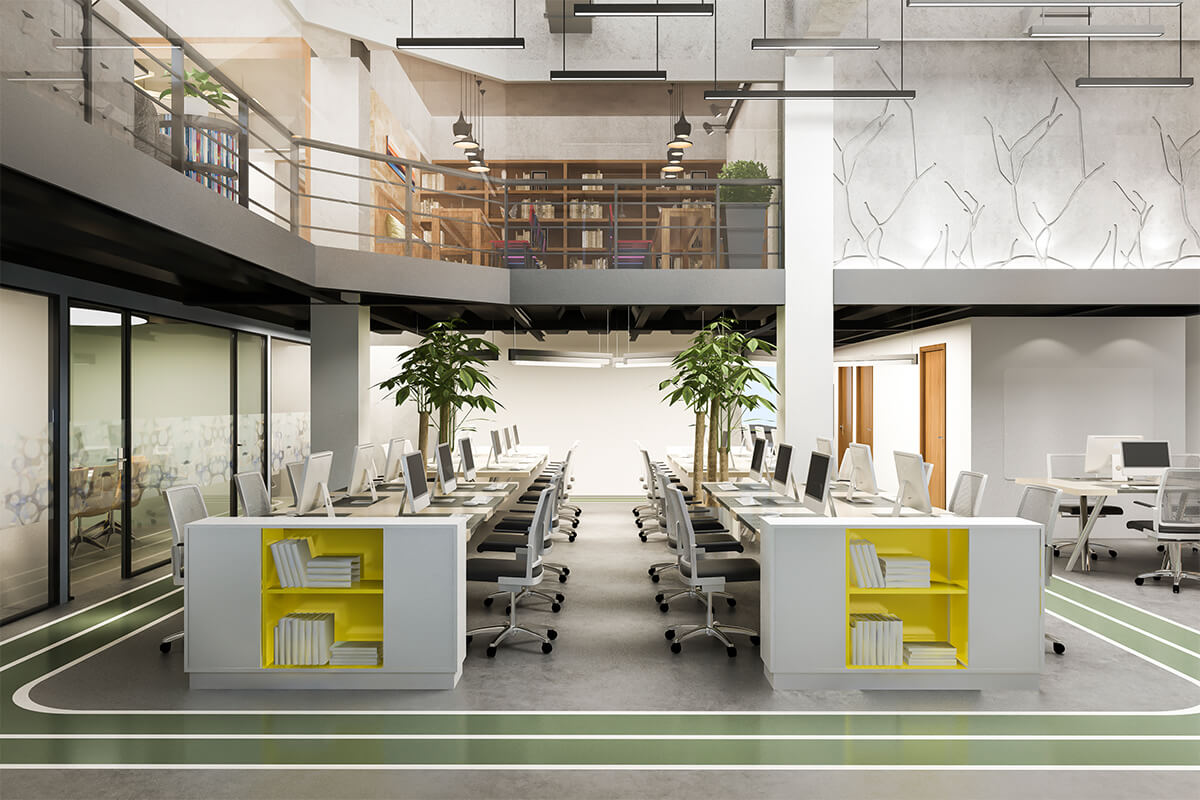
Introduction
Your office is more than just a place to work. It is a reflection of your brand, a driver of employee performance, and a key factor in attracting top talent. A well-designed office can improve productivity, reduce absenteeism, and significantly boost employee morale.
Whether you are setting up a new office in Hyderabad or revamping an existing workspace, the right interior design choices can make a world of difference. In this guide, we will walk you through proven office interior design ideas that create productive, inspiring, and functional workspaces, backed by commercial design expertise at InteriQo.
1. Start With Strategic Space Planning
The foundation of any productive office is smart space planning. Before choosing furniture or colors, understand how your team works.
- Open plan areas encourage collaboration and communication between teams.
- Semi-private zones with partitions offer focused work without complete isolation.
- Private cabins or enclosed rooms are essential for leadership, HR, and confidential meetings.
- Breakout spaces give employees a place to decompress, ideate, and connect informally.
A well-balanced office layout accounts for all these zones and ensures smooth traffic flow so employees are not constantly navigating around one another.
Pro Tip from InteriQo: We begin projects with a detailed space audit, mapping team sizes, workflows, and interaction patterns before putting anything on paper. This prevents costly redesigns later.
2. Invest in Ergonomic, Modular Furniture
Furniture is one of the biggest investments in any office interior and has a direct impact on employee health and output. Poor seating and desk setups lead to back pain, fatigue, and reduced concentration.
What to look for in office furniture
- Height-adjustable desks that support both sitting and standing work positions.
- Ergonomic chairs with lumbar support, adjustable armrests, and breathable upholstery.
- Modular workstations that can be reconfigured as team sizes change.
- Storage-integrated furniture to reduce clutter and keep surfaces clear.
At InteriQo, modular furniture can be customized for dimensions, finishes, and configurations that suit each client's space and brand requirements.
3. Get the Lighting Right
Lighting is one of the most underestimated elements of office design. Poor lighting causes eye strain, headaches, and fatigue.
- Maximize natural light by positioning desks parallel to windows and using glass partitions.
- Use task lighting at individual workstations for focused work.
- Add ambient lighting for general illumination without harsh overhead glare.
- Use accent lighting to highlight reception areas, architectural features, or brand walls.
Warm-white LED lighting between 3000K and 4000K strikes a strong balance between focus and comfort for most office environments.
4. Use Color Psychology to Your Advantage
Color has a measurable effect on mood, energy levels, and focus. Choosing the right palette for different zones can influence how your team feels and performs.
| Color | Effect | Best For |
|---|---|---|
| Blue | Calm, focused, trust | Task-heavy areas, finance teams |
| Green | Balanced, refreshing | Long-hour work zones, wellness areas |
| Yellow | Energy, creativity | Creative departments, brainstorming rooms |
| White/Grey | Clean, minimal | Reception, executive areas |
| Red/Orange | High energy, urgency | Accent walls only |
A smart approach is to keep the primary workspace palette neutral and calm, while using bolder accents in breakout zones and meeting rooms.
5. Design Collaborative Spaces That Actually Work
The rise of hybrid work has made purposeful collaboration spaces more important than ever. Simply pushing desks together does not create collaboration. Intentional design does.
- Writable walls or whiteboards for visual brainstorming.
- Comfortable, movable seating such as sofas, ottomans, and bar-height tables.
- Integrated AV and display screens for hybrid meetings.
- Acoustic treatment so noise from collaborative zones does not spill into focused work areas.
6. Do Not Neglect Acoustics
In open-plan offices, noise is one of the top complaints. Acoustic comfort directly affects concentration, stress levels, and communication quality.
- Acoustic ceiling tiles or panels to absorb sound.
- Soft flooring, carpet tiles, or LVT with underlay instead of bare concrete or ceramic.
- Booth seating and phone pods for private calls without dedicated rooms.
- Indoor greenery to support sound absorption and improve air quality.
7. Incorporate Biophilic Design Elements
Biophilic design connects the built environment to nature. Natural elements can improve wellbeing and make a workspace feel calmer, fresher, and more human.
- Indoor plants and vertical gardens using low-maintenance options.
- Natural materials such as wood veneers, stone surfaces, and bamboo accents.
- Nature-inspired textures and patterns in wallcoverings or upholstery.
- Water features in reception areas for a calming ambience.
8. Reflect Your Brand Identity in Your Office Design
Your office should tell your brand story to every employee, client, and visitor who walks through the door. A generic workspace misses a major opportunity to reinforce culture and values.
- Brand walls and logo installations at reception and key focal points.
- Brand color accents woven into furniture, partition panels, or flooring.
- Custom artwork and murals that reflect company culture or milestones.
- Branded wayfinding, signage, room names, and directional cues.
9. Plan for Technology Integration
Modern offices run on technology, and interior design must accommodate it seamlessly from the planning stage.
- Cable management built into desks, floors, and ceilings.
- Charging points and USB ports at workstations, meeting tables, and lounge areas.
- Smart lighting and climate control systems for energy efficiency.
- Video conferencing setups designed with camera sightlines and acoustics in mind.
10. Think Long-Term: Flexible, Future-Ready Design
Business needs change. Teams grow, shrink, and restructure. Successful office interiors are designed with flexibility from the start.
- Demountable partition systems that can be relocated without major construction.
- Modular furniture that reconfigures for different team sizes and layouts.
- Scalable power and data infrastructure with capacity built in.
- Multi-use spaces that can serve as meeting rooms, event spaces, or overflow workstations.
Why Choose InteriQo for Your Office Interior Project?
InteriQo has been delivering end-to-end commercial interior solutions across Hyderabad since 2010. From initial design concepts to modular furniture, execution, and project management, we handle every major aspect under one roof.
Our office interior services include:
- Space planning and concept design.
- Custom modular furniture manufacturing.
- False ceiling, flooring, and woodwork.
- Electrical, plumbing, and MEP coordination.
- End-to-end project management.
Final Thoughts
A productive office is the result of deliberate, expert design decisions. From layout and lighting to acoustics and brand identity, every element plays a role in shaping how your team performs and feels each day.
If you are planning an office interior project in Hyderabad, InteriQo would love to be part of the journey.
Plan Your Office Interior With InteriQo
Call +91 7842022216 or email info@interiqo.com to discuss your office interior project.
Request Consultation